Baking soda is one of those everyday kitchen ingredients that seems to have a hundred different uses. From cleaning countertops to helping cakes rise, this inexpensive white powder has earned a permanent place in many homes.
But what about using baking soda on your face?
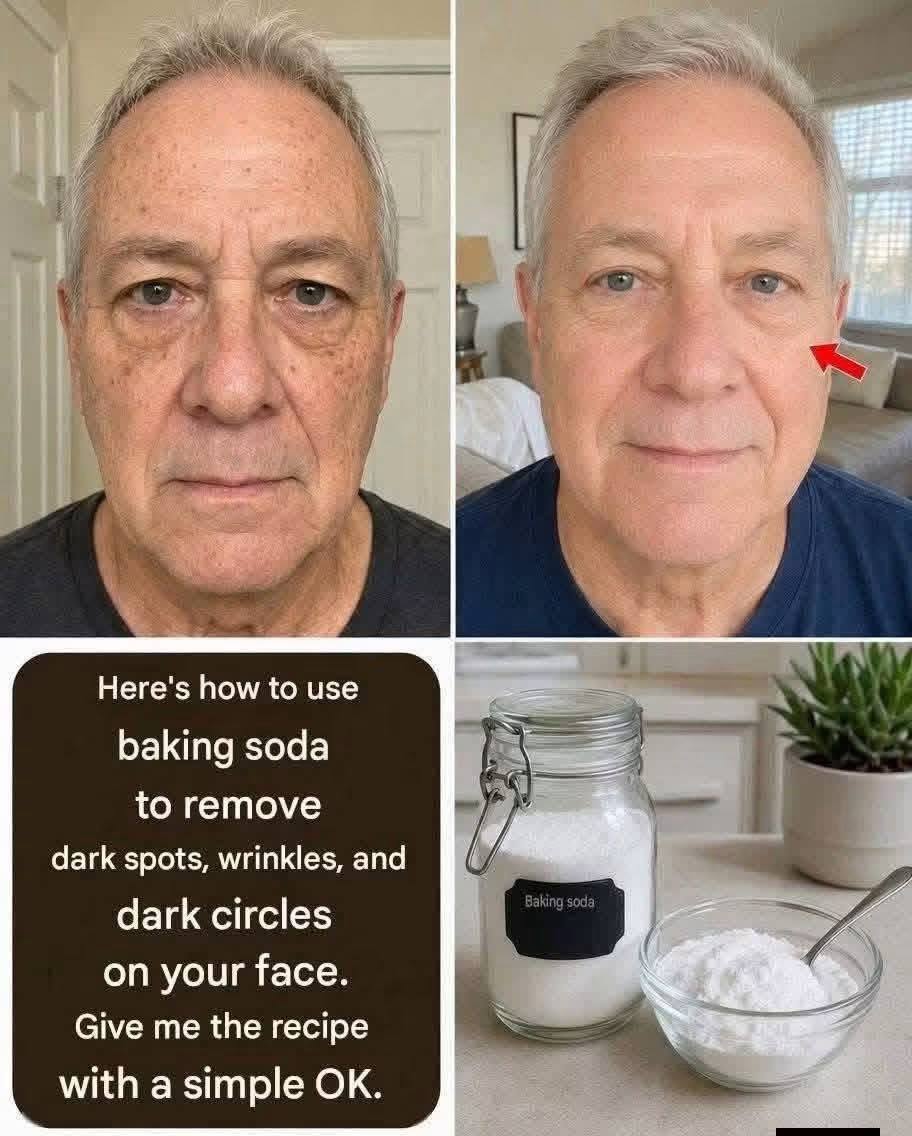
You may have seen pictures claiming that baking soda can remove dark spots, smooth wrinkles, and make under-eye circles disappear. Some even show dramatic before-and-after transformations that make the results look almost unbelievable.
The idea is tempting. After all, who wouldn’t want smoother, brighter-looking skin without spending a fortune on expensive skincare products?
However, there’s something important to understand before reaching for that box of baking soda.
While baking soda has several household uses, it isn’t a proven treatment for wrinkles, pigmentation, or dark circles. Applying it directly to facial skin can actually cause irritation and dryness.
Fortunately, there are gentler ways to care for your skin at home.
Why Do People Use Baking Soda on Their Faces?
Baking soda, also known as sodium bicarbonate, is a fine white powder with alkaline properties.
Some homemade beauty recipes recommend mixing it with water, honey, or lemon juice to create a facial scrub.
The idea is that its slightly gritty texture can remove dead skin cells and leave the face feeling smoother.
However, facial skin is delicate, especially around the eyes.
The skin’s natural surface is mildly acidic, which helps maintain its protective barrier.
Baking soda is alkaline, with a pH of approximately 8.3 when dissolved in water.
Repeated application can disrupt the skin’s natural balance.
This may lead to dryness, redness, irritation, and increased sensitivity.
For people with sensitive skin, eczema, or rosacea, the reaction can be particularly uncomfortable.
That’s why dermatologists generally favor skincare products formulated specifically for facial use.
Can Baking Soda Remove Dark Spots?
Dark spots are common, especially as we get older.
They can develop for several reasons, including sun exposure, hormonal changes, and inflammation.
Some dark marks appear after acne or other skin irritation.
These are often called post-inflammatory hyperpigmentation.
Although baking soda is sometimes promoted as a natural brightening ingredient, there is no reliable scientific evidence that it safely removes dark spots.
In fact, irritating the skin can make pigmentation worse, particularly in people with medium to darker skin tones.
Instead of using harsh homemade scrubs, consider gentle skincare ingredients that have been studied for uneven skin tone.
Niacinamide, azelaic acid, and certain vitamin C products may help improve the appearance of some types of discoloration.
Daily sunscreen is especially important because ultraviolet exposure can darken existing spots.
New, changing, bleeding, or unusually shaped dark spots should be assessed by a healthcare professional rather than treated at home.
Does Baking Soda Help With Wrinkles?
Wrinkles develop naturally as skin ages.
Over time, the production and organization of collagen and elastin change.
The skin also gradually loses some of its ability to retain moisture.
Sun exposure, smoking, genetics, and environmental factors can contribute to visible aging.
Baking soda does not replace lost collagen or reverse these processes.
Although a scrub may temporarily make the skin feel smoother, that doesn’t mean it has reduced wrinkles.
Aggressive exfoliation may actually make fine lines more noticeable by leaving the skin dry and irritated.
A more useful approach involves gentle cleansing, moisturizing, and protecting the skin from the sun.
For people interested in reducing the appearance of fine lines, professionally formulated retinoid products may be an option, depending on skin type and individual circumstances.
What About Dark Circles Under the Eyes?
Dark circles are another common concern.
They may be related to genetics, pigmentation, allergies, thin skin, or shadows created by the natural structure of the face.
Lack of sleep can make them more noticeable, but it isn’t always the main cause.
The skin around the eyes is particularly thin and sensitive.
Applying baking soda near this area is not recommended.
It can cause irritation, and accidental contact with the eyes may lead to significant discomfort.
A better option is to focus on gentle moisturizing, adequate sleep, sun protection, and managing any underlying allergies.
A cool compress may temporarily help reduce puffiness.
However, persistent dark circles caused by genetics or facial anatomy may not respond significantly to home remedies.
A Gentle Homemade Oatmeal Face Mask
If you enjoy preparing simple skincare treatments at home, you don’t have to give up the experience.
Instead of baking soda, try a basic oatmeal mask.
Oatmeal is commonly used in skincare because it contains compounds that can help soothe dry, irritated skin.
This recipe is designed to provide a gentle, moisturizing experience rather than promise dramatic anti-aging results.
Ingredients
- 1 tablespoon finely ground plain oatmeal
- 1 tablespoon plain, unsweetened yogurt
- 1 teaspoon water, if needed
Choose plain oatmeal without added fragrances or flavorings.
If your skin is sensitive to yogurt or dairy products, replace the yogurt with a little water to make a soft paste.
How to Prepare the Mask
Start by grinding the oatmeal into a fine powder.
You can use a clean blender or coffee grinder.
Place the ground oatmeal in a small bowl.
Add the yogurt and stir until the ingredients form a smooth paste.
If the mixture is too thick, add a few drops of water.
The consistency should be soft enough to spread without rubbing.
How to Apply It
Wash your face with a gentle cleanser and pat it dry.
Apply a thin layer of the oatmeal mixture, avoiding the eyes and lips.
Leave it on for approximately 5–10 minutes.
Rinse gently with lukewarm water.
Avoid scrubbing the mixture against your skin.
Finish by applying a fragrance-free moisturizer.
Always perform a patch test before using a new homemade skincare preparation.
Discard any leftover mixture rather than storing it for future use.
A Simple Routine for Brighter-Looking Skin
You don’t need a complicated collection of products to take care of your face.
A consistent routine with a few suitable products can be more helpful than frequently changing homemade treatments.
Morning Routine
Begin with a gentle facial cleanser.
If your skin is dry, washing with lukewarm water alone may be sufficient for some people.
Apply a lightweight moisturizer suitable for your skin type.
Finish with broad-spectrum sunscreen with SPF 30 or higher.
Sun protection is one of the most effective ways to help prevent premature skin aging and reduce the worsening of pigmentation.
Evening Routine
Remove makeup and sunscreen using a gentle cleanser.
Avoid harsh scrubs and strongly fragranced products if your skin is sensitive.
Apply a moisturizer containing ingredients such as glycerin, ceramides, or hyaluronic acid.
These ingredients help maintain hydration and support the skin barrier.
If you’re using a treatment for pigmentation or fine lines, introduce it gradually and follow the product instructions.
Natural Ingredients That May Be Gentler Than Baking Soda
Not every kitchen ingredient belongs on your face, but a few simple options can be useful when prepared carefully.
Oatmeal
Finely ground oatmeal can be included in gentle skincare preparations.
Colloidal oatmeal, which is specially processed for skincare, has better-established benefits for supporting dry and irritated skin.
Aloe Vera
Commercially prepared, fragrance-free aloe vera gel may provide a cooling and moisturizing sensation.
It does not erase wrinkles, but some people find it soothing.
Patch testing is still important because aloe vera can cause allergic reactions.
Plain Yogurt
Plain yogurt is sometimes used in homemade facial masks.
However, evidence for its cosmetic benefits is limited, and it may irritate sensitive skin.
It should never be considered a replacement for properly formulated skincare treatments.
Ingredients You Should Avoid Putting on Your Face
Some popular DIY beauty ingredients can cause more problems than they solve.
Lemon juice is one example.
Although it contains vitamin C, applying fresh lemon juice directly to the face can cause irritation and, in certain circumstances, reactions associated with sunlight.
Toothpaste is another ingredient frequently recommended for pimples.
Its ingredients are formulated for teeth, not delicate facial skin.
Undiluted essential oils can also cause irritation or allergic contact dermatitis.
And despite its popularity in homemade beauty videos, baking soda is not a good choice for regular facial exfoliation.
Gentle skincare usually produces more reliable results than experimenting with harsh household ingredients.
Everyday Habits That Support Healthy Skin
Skincare products are only one part of maintaining healthy-looking skin.
Daily habits matter, too.
Eating a varied diet provides nutrients needed for normal skin function.
Foods containing vitamin C, protein, and healthy fats can contribute to overall nutritional health.
Adequate sleep supports normal recovery and well-being.
Avoiding smoking is another important step because tobacco exposure contributes to premature skin aging.
Staying hydrated is essential for general health, although drinking extra water will not automatically remove wrinkles.
Most importantly, protect your skin from excessive sunlight.
Regular sunscreen use can help reduce the development of sun-related pigmentation and premature aging.
Frequently Asked Questions
Can baking soda remove wrinkles overnight?
No. There is no scientific evidence that baking soda removes wrinkles overnight or permanently reverses skin aging.
Can baking soda lighten dark spots?
Baking soda is not a proven treatment for hyperpigmentation. It may irritate the skin and potentially worsen discoloration.
Is baking soda safe under the eyes?
No. The under-eye area is delicate, and baking soda can cause irritation. Avoid applying it near the eyes.
Can I mix baking soda with honey for my face?
Although this combination appears in many homemade recipes, adding honey does not eliminate the potential irritation caused by baking soda.
What is a safer alternative to baking soda?
A gentle cleanser, moisturizer, sunscreen, and appropriately formulated skincare treatments are better options. For a homemade mask, finely ground oatmeal mixed with water may be gentler.
How long does it take for dark spots to fade?
It depends on the cause and depth of pigmentation. Some marks fade gradually over several months, while others require professional treatment.
Can homemade masks make skin look younger?
A gentle moisturizing mask may temporarily make skin feel softer and look more hydrated. It cannot permanently eliminate wrinkles or reverse aging.
Final Thoughts
Baking soda is inexpensive, versatile, and useful for many household tasks.
However, its popularity as a DIY beauty ingredient doesn’t mean it’s suitable for facial skincare.
There is no reliable evidence that baking soda removes dark spots, eliminates wrinkles, or treats dark circles.
Because it is alkaline and potentially irritating, applying it to the face may do more harm than good.
If your goal is softer, smoother, and healthier-looking skin, focus on gentle cleansing, consistent moisturizing, and daily sun protection.
A simple oatmeal mask can also be an enjoyable occasional addition to your routine, provided your skin tolerates it.
Healthy skin doesn’t require dramatic before-and-after transformations or miracle kitchen ingredients.
Sometimes the best beauty routine is simply treating your skin gently and giving it the care it needs.