Wrinkles, fine lines, and dry skin are natural parts of aging. But that doesn’t mean we can’t give our skin a little extra care.
One homemade ingredient that has attracted plenty of attention is aloe vera gel.
Its smooth, cooling texture makes it a popular choice for simple skincare routines. Many people enjoy applying it to their hands, face, and other areas that need extra moisture.
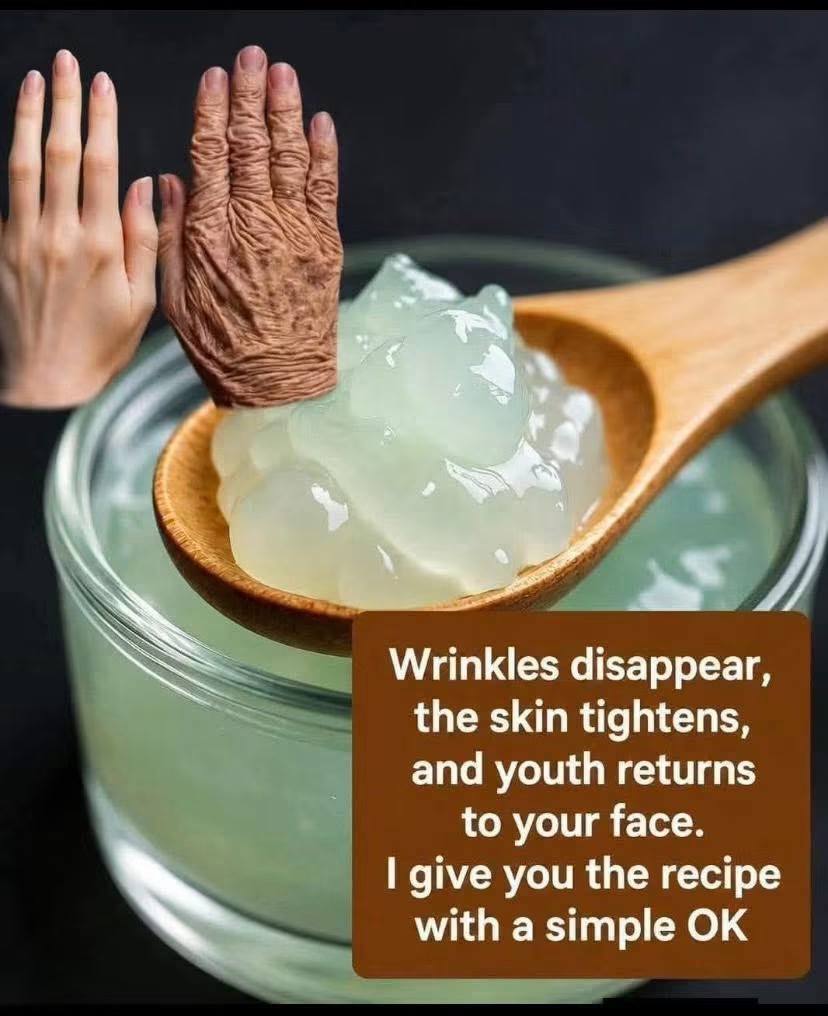
The image shows a translucent, jelly-like substance being presented as a treatment for wrinkles. Although its exact ingredients cannot be identified from the picture, fresh aloe vera gel has a similar appearance.
Can aloe vera really make wrinkles disappear and bring back youthful skin? Not exactly. But it may help moisturize the skin and temporarily improve the appearance of dryness-related fine lines.
Here’s a simple aloe vera skincare recipe, along with practical tips for using it safely.
Why Aloe Vera Is Popular in Skincare
Aloe vera is a succulent plant with thick, fleshy leaves containing a clear gel.
This gel has been used in traditional skincare preparations for generations.
Its popularity comes partly from its lightweight texture and cooling sensation.
Unlike thick creams, aloe vera gel spreads easily and usually feels refreshing on the skin.
It contains water and various naturally occurring plant compounds.
Aloe vera is often included in commercial moisturizers, soothing lotions, and after-sun products.
However, homemade aloe vera gel is not identical to professionally formulated skincare products, which are usually processed, preserved, and tested for stability.
Can Aloe Vera Reduce the Appearance of Wrinkles?
Skin aging is influenced by several factors, including genetics, sunlight exposure, environmental conditions, and natural changes in collagen and elastin.
As we age, our skin gradually loses some of its elasticity and ability to retain moisture.
This can make fine lines and wrinkles more noticeable.
Moisturizing ingredients can temporarily make the skin appear smoother by improving hydration.
Aloe vera may contribute to this effect, particularly when used as part of a moisturizing routine.
Some small studies have explored aloe vera’s effects on skin hydration and elasticity, but the evidence is limited.
There is no reliable proof that homemade aloe vera gel permanently removes wrinkles, tightens loose skin, or reverses aging.
Still, it can be an enjoyable ingredient for people who tolerate it well.
Ingredients for Homemade Aloe Vera Gel
For a small batch, you will need:
1 fresh, mature aloe vera leaf from a correctly identified edible or skincare-grade aloe plant
Clean drinking water for rinsing
A clean spoon
A small bowl
A blender, optional
A clean, airtight container
For an easier and more predictable option, use commercially prepared, fragrance-free aloe vera gel intended for facial skincare.
Fresh aloe leaves contain a yellow latex layer beneath the outer skin. This material can irritate the skin and should not be included in the gel preparation.
How to Prepare Aloe Vera Gel
Step 1: Wash the Leaf
Begin by washing the aloe vera leaf thoroughly under running water.
Make sure your hands, knife, and work surface are clean.
This helps reduce the introduction of dirt and microorganisms into the preparation.
Step 2: Remove the Yellow Latex
Cut the base of the leaf and allow the yellow sap to drain away.
This yellow substance is different from the clear inner gel.
Avoid contact with the eyes and sensitive skin.
If you cannot confidently separate the clear inner gel from the latex, choose a commercially prepared aloe vera product instead.
Step 3: Extract the Clear Gel
Carefully remove the green outer skin.
Using a clean spoon, collect only the clear, transparent inner gel.
Discard any portions that contain yellow or discolored material.
Place the clear gel into a clean bowl.
Step 4: Blend Until Smooth
For a smoother texture, blend the clear gel briefly.
You should obtain a light, slippery mixture.
Avoid adding essential oils, perfume, or lemon juice, especially when preparing a product for facial use.
These additions may increase the risk of irritation.
Step 5: Use Immediately
Fresh aloe gel contains plenty of water and has no reliable preservative system.
For that reason, the safest homemade approach is to prepare only a small amount for immediate use and discard any leftovers.
Do not assume that refrigeration alone makes a homemade skincare gel safe for several days.
How to Apply Aloe Vera Gel to Your Face
Start with clean, dry skin.
Before applying aloe vera to your entire face, perform a patch test on a small area of skin.
Wait 24–48 hours and check for redness, itching, burning, or irritation.
If your skin tolerates the product, apply a thin layer to your face.
Gently spread the gel using clean fingertips.
Avoid the eyes, eyelids, lips, and broken or irritated skin.
You can leave it on briefly and rinse it off with lukewarm water.
Afterward, apply your usual fragrance-free moisturizer.
Aloe vera is not a substitute for a complete skincare routine, but it may provide an additional soothing step for some people.
A Simple Aloe Vera and Oatmeal Mask
If you enjoy homemade skincare, another gentle option is an aloe vera and oatmeal mask.
Oatmeal is commonly used in skincare because of its soothing properties.
This combination creates a soft paste that is easy to spread.
Ingredients
1 tablespoon commercially prepared, fragrance-free aloe vera gel
1 tablespoon finely ground plain oatmeal
1–2 teaspoons clean water, as needed
Preparation
Place the oatmeal in a small bowl.
Add the aloe vera gel and stir until the ingredients are combined.
If the mixture is too thick, add a few drops of water.
Apply a thin layer to clean skin, avoiding the eye area.
Leave it on for approximately 5–10 minutes, then rinse gently.
Follow with a moisturizer.
Prepare the mask fresh each time and discard leftovers.
Do not use it if you have a known allergy to any ingredient.
Why Moisturizing Matters as We Age
One of the most noticeable changes in mature skin is dryness.
The skin barrier can become less effective at retaining moisture over time.
When skin becomes dry, fine lines may appear more pronounced.
Regular moisturizing helps reduce water loss and improves the skin’s overall appearance.
Aloe vera gel may provide temporary hydration, but a moisturizer containing ingredients such as glycerin, ceramides, or petrolatum may offer more reliable moisture retention.
For many people, combining a gentle cleanser with a suitable moisturizer is more helpful than frequently experimenting with homemade treatments.
Consistency matters more than complicated routines.
Everyday Habits That Support Healthy-Looking Skin
Skincare isn’t only about what we apply to our faces.
Daily habits also influence how our skin looks and feels.
Protect Your Skin From the Sun
Sun exposure is one of the major contributors to premature skin aging.
Using broad-spectrum sunscreen with SPF 30 or higher helps protect against ultraviolet damage.
Wearing a hat and seeking shade during strong sunlight can provide additional protection.
Stay Hydrated
Drinking enough water supports normal body functions.
Although extra water won’t magically erase wrinkles, maintaining adequate hydration is important for overall health.
Eat a Balanced Diet
Fruits, vegetables, whole grains, healthy fats, and adequate protein provide nutrients that support normal tissue maintenance.
Vitamin C is particularly important for the body’s natural collagen production.
Foods such as oranges, strawberries, bell peppers, and broccoli are useful sources.
Get Enough Sleep
Sleep supports the body’s normal recovery processes.
A regular sleep schedule can also help you feel more refreshed.
Avoid Smoking
Smoking contributes to premature skin aging and affects the skin’s overall health.
Avoiding tobacco is beneficial for both skin and general well-being.
Common Mistakes With Homemade Skincare
Applying Too Much Gel
A thick layer doesn’t necessarily provide better results.
A small amount is usually enough to cover the skin.
Adding Lemon Juice
Lemon juice is often recommended in homemade beauty recipes, but it can irritate the skin.
Citrus juice may also increase sensitivity to sunlight under certain conditions.
It’s better to leave it out of facial preparations.
Using Unknown Plants
Not every succulent plant is aloe vera.
Never apply material from an unidentified plant to your skin.
Expecting Permanent Wrinkle Removal
Aloe vera may help skin feel hydrated, but it cannot eliminate deep wrinkles or restore youthful skin permanently.
Keeping Homemade Gel Too Long
Fresh gel can become contaminated with microorganisms.
Preparing small amounts for immediate use reduces unnecessary storage risks.
Frequently Asked Questions
Can aloe vera remove wrinkles permanently?
No. Aloe vera may temporarily improve the appearance of dry skin, but it has not been proven to permanently eliminate wrinkles.
Can I apply aloe vera every day?
Some people tolerate aloe vera well, but others experience irritation or allergic reactions. Start with occasional use and stop if discomfort develops.
Is aloe vera suitable for mature skin?
It may be suitable for some people with mature skin, particularly as a moisturizing or soothing ingredient. Skin sensitivity varies, so patch testing is important.
Can I leave aloe vera on my face overnight?
A commercially formulated leave-on aloe product may be used according to its instructions. Fresh homemade gel is less predictable and is better used briefly before rinsing.
Does aloe vera increase collagen production?
Some preliminary research has explored aloe vera and skin-related processes, but there is insufficient evidence that applying homemade aloe gel meaningfully increases facial collagen or reverses aging.
Can I use aloe vera on my hands?
Yes, if your skin tolerates it. Aloe vera gel can be applied to intact skin on the hands, followed by a moisturizing hand cream.
How long does it take to see results?
Your skin may feel temporarily softer or more hydrated after application. There is no established timeline for wrinkle reduction from homemade aloe vera gel.
Final Thoughts
Aloe vera is a familiar plant ingredient that can make a refreshing addition to a simple skincare routine.
Its lightweight texture and moisturizing properties make it appealing, particularly for people who enjoy gentle, uncomplicated skincare.
However, claims that a homemade gel can make wrinkles disappear, dramatically tighten loose skin, or restore youth are exaggerated.
Healthy-looking skin benefits from consistent moisturizing, sun protection, balanced nutrition, and appropriate skincare products.
If you want to experiment with aloe vera, choose a safe preparation, perform a patch test, and keep your expectations realistic.
Sometimes taking care of your skin isn’t about turning back the clock. It’s about keeping it comfortable, hydrated, and cared for at every age.